
Last updated November 15, 2026
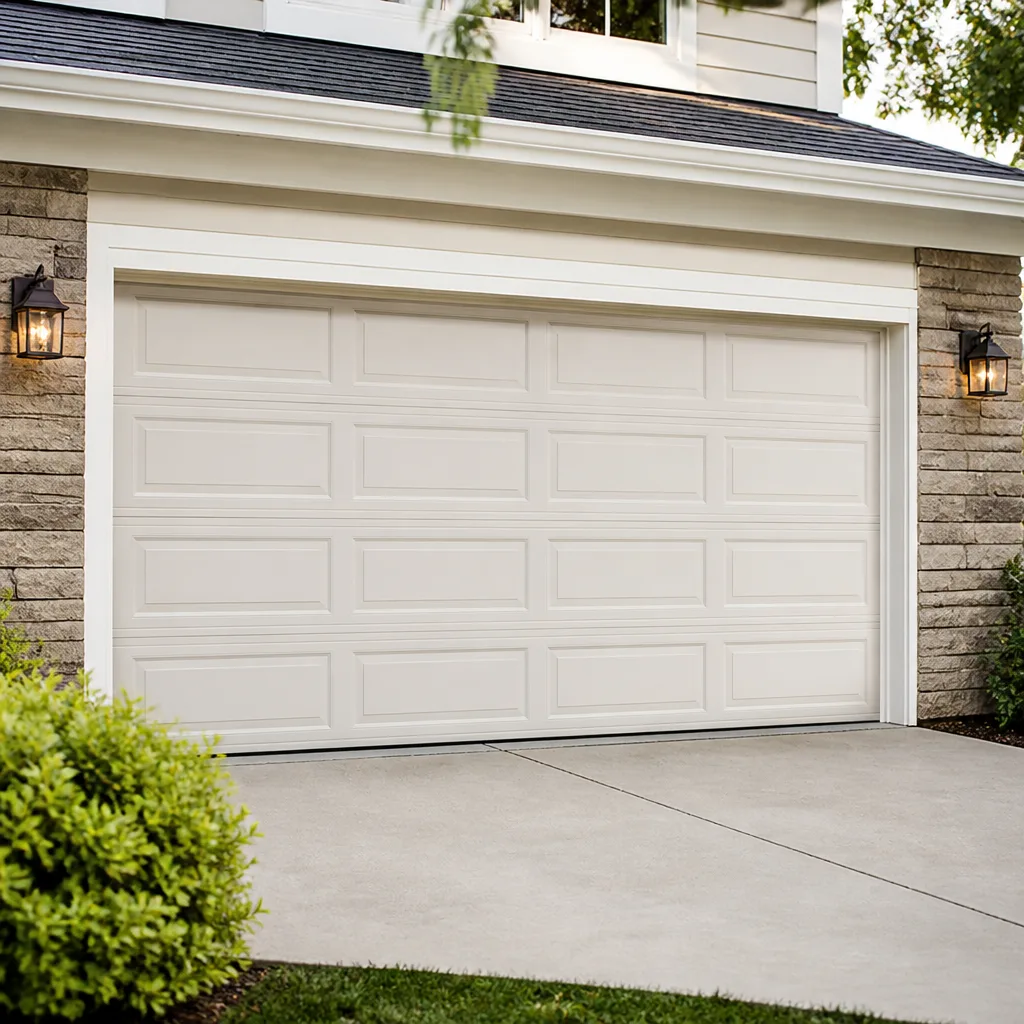 Raised-panel steel
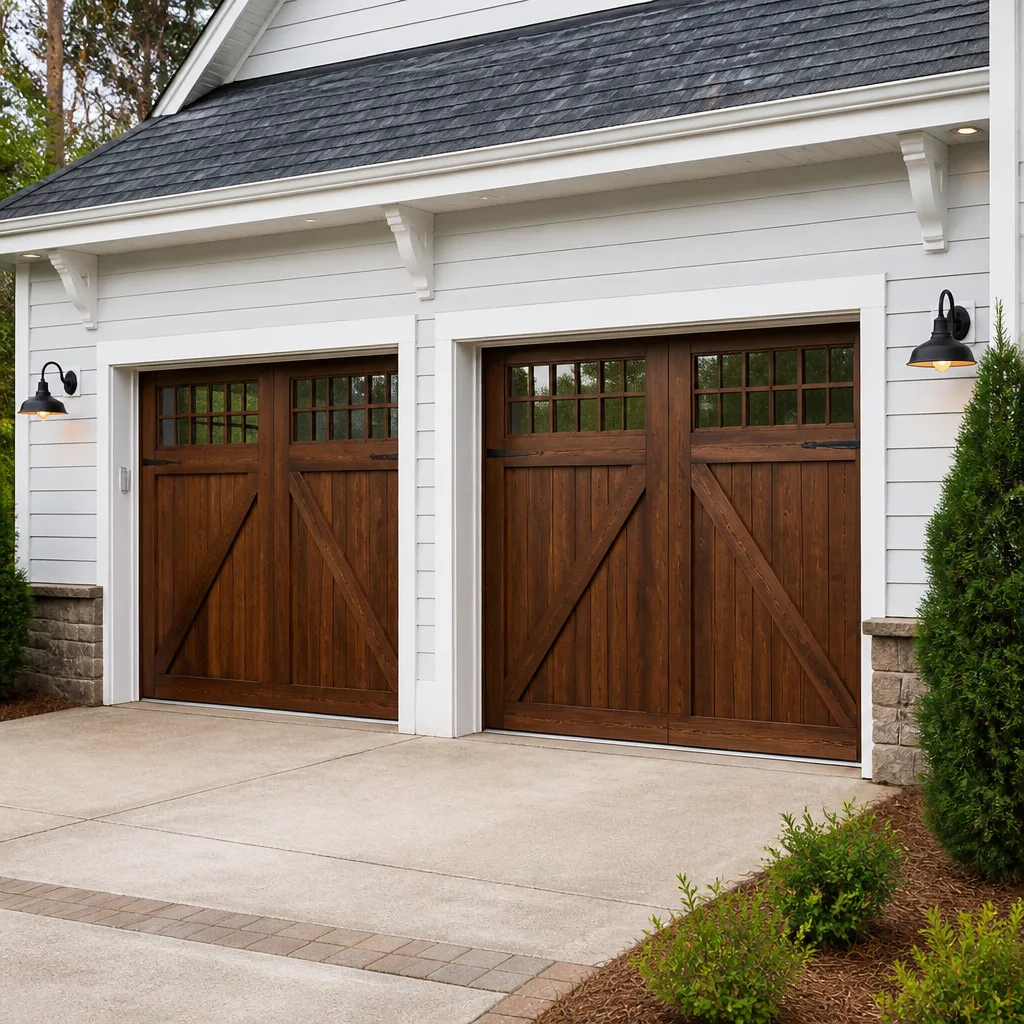 Carriage house
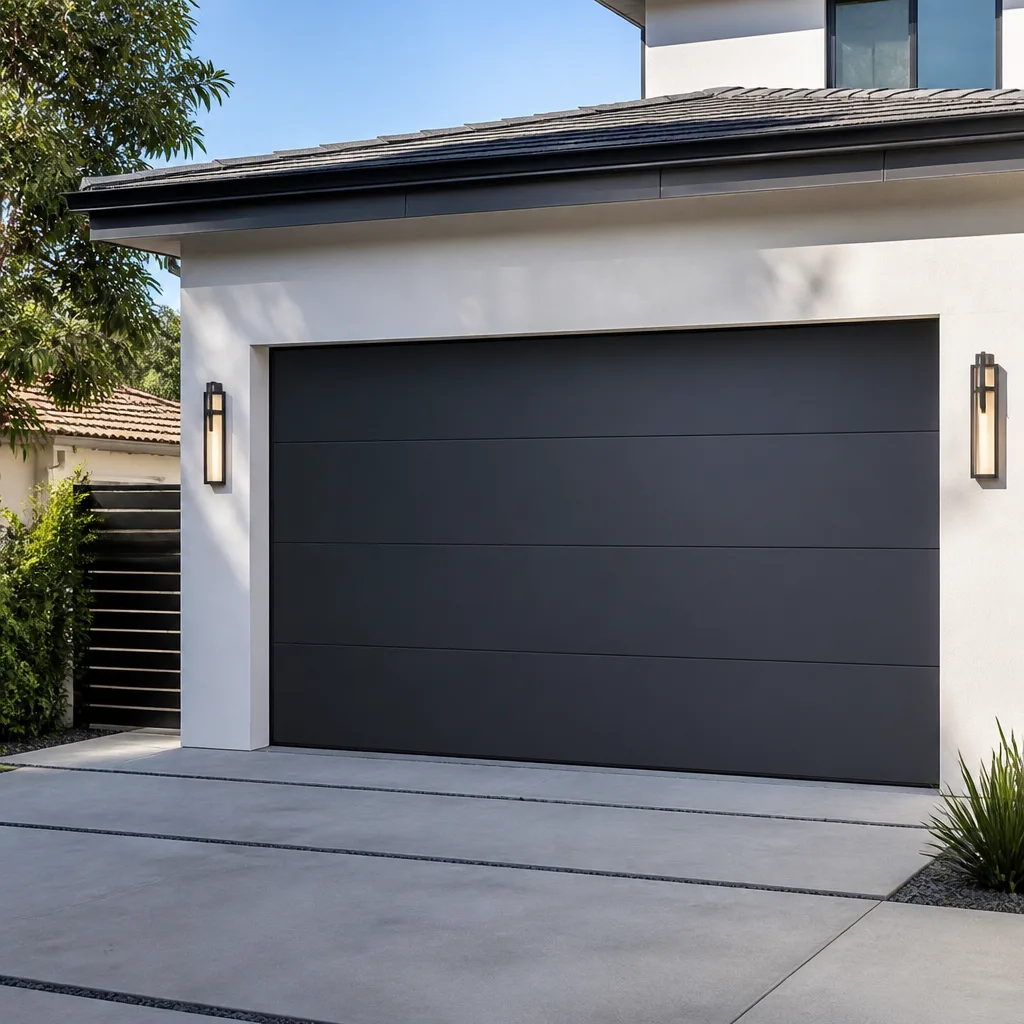 Modern flush
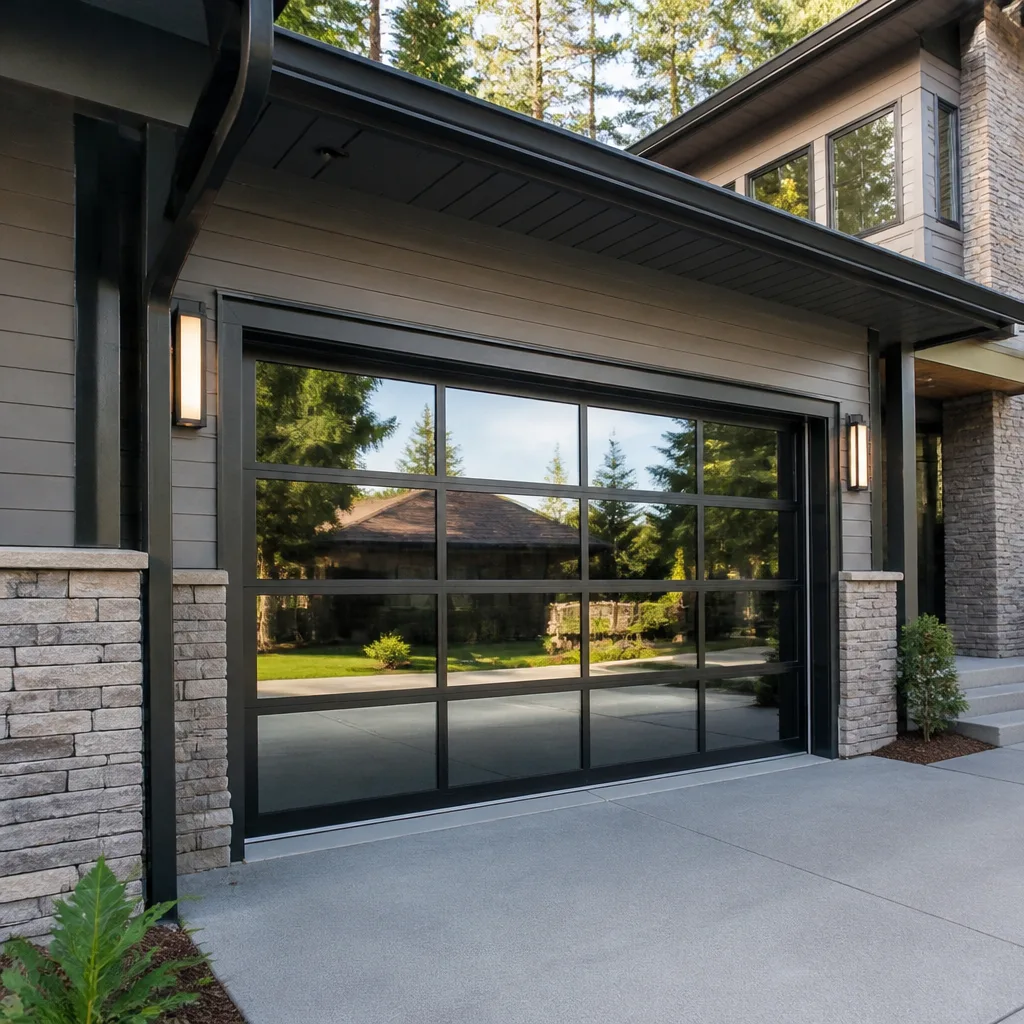 Full-view glass
 LiftMaster openers
 Chamberlain openers
Full 25-point door and opener safety check with every visit - springs, cables, rollers, tracks, and your LiftMaster or Chamberlain opener included
You get a price before we start. It does not change when the pro arrives.
Get your free estimateSeasonal Garage Door Care for Tucson: Year-Round Homeowner’s Guide
Telling a Tucson homeowner to “winterize” a garage door is a category error. Winter here is the easy part. The transition that actually breaks things arrives in May, when the afternoon temperature climbs past 100°F and the steel in your door starts expanding faster than the hardware around it can cope with. Tracks bind, springs take on extra load, and openers that were fine in March start straining by the first week of June. Most homeowners don’t notice until the door stops halfway up. This guide breaks the Tucson year into five phases, tells you what each one does to your door, and gives you a simple checklist for each.
Quick Answer
Garage door care in Tucson runs on five phases, not four seasons: the spring heat ramp (March to May), pre-monsoon prep (May to June), the monsoon itself (July to September), a post-monsoon reset in October, and a winter light season from November to February. The two things that matter most are track alignment as temperatures cross 100°F and lubricant that doesn’t thicken in the cool months. Check the door by hand once a month, lube twice a year, and book any real adjustment in October.
Styles & brands we work with
- Raised-panel steel
- Carriage house
- Modern flush
- Full-view glass
- LiftMaster openers
- Chamberlain openers
Table of Contents
- Why Tucson Doesn’t Have a Normal Garage Door Calendar
- March to May: The Heat Ramp and What It Does to Your Door
- May to June: Pre-Monsoon Preparation
- July to September: What to Do After a Dust Storm or Rain Event
- October: The Post-Monsoon Reset
- November to February: The One Cold-Weather Issue That Applies Here
- How to Tell If Your Opener Is Heat-Stressed Before It Fails
- Brand Fluency and Why It Matters for Seasonal Care
Why Tucson Doesn’t Have a Normal Garage Door Calendar
Garage doors across most of the country live through a freeze-and-thaw rhythm. Cold contracts the metal, heat expands it, and the cycle repeats. Materials fatigue in slow, predictable waves. Tucson doesn’t work that way. Our door problem is sustained heat, and sustained heat doesn’t cycle much. It just sits there, day after day, pushing every component in one direction: outward. Steel panels grow. Tracks shift. Grease thins. Rubber seals harden and crack.
Then monsoon arrives and adds moisture to hardware that’s been baking since spring. Then fall comes, temperatures drop twenty degrees, and all that expanded metal contracts again. It’s not the calendar you’d draw for a garage door if you were designing one from scratch.
Here’s what that means in practice for a home in Tucson. The door you have is fine. The schedule you keep for it isn’t. A generic “check your door in spring and fall” routine ignores the two moments that actually matter locally: the ramp into peak heat, and the week after the last monsoon storm. Those are the two windows where a small adjustment saves a bigger repair.
We see this constantly on service calls. Doors that passed a spring inspection with no issues show up binding in June. Doors that ran clean through the summer start grinding in November. Same door, same owner, different season. The components didn’t change. The conditions did.
If you’re new to the Tucson area, or you’ve just bought a home with a door of unknown age, the seasonal rhythm below is the fastest way to get ahead of it. It’s also the reason our garage door repair calls cluster in two waves: early June and early October.
March to May: The Heat Ramp and What It Does to Your Door
March in Tucson feels like spring anywhere else. By late April, the afternoon highs are pushing toward the triple digits, and by the end of May the garage interior can run noticeably hotter than the outside air. That’s the ramp, and it’s the most consequential stretch of the year for a garage door.
What happens to the metal. Steel door panels expand as they heat. The expansion is small in absolute terms, but the tolerances on a residential door are also small. A track that was perfectly parallel in February can bind a roller by late May. That binding shows up as a scraping sound, a door that hesitates on the way up, or a door that leans slightly to one side as it rises.
What happens to the springs. Torsion springs carry the door’s weight. When the door itself gains a little weight from expansion, the springs take on slightly more load. A spring already near the end of its service life doesn’t need much extra. This is where the late-spring spring failure comes from, and it’s why we tell homeowners to listen for a change in the door’s sound in April and May.
What happens to the opener. The opener has to lift a door that’s slightly heavier and slightly more resistant than it was in winter. That extra work translates into heat inside the unit. Most openers handle it. An opener with a worn gear, a tired capacitor, or a stretched belt does not.
Here’s the monthly check we suggest for March through May:
- Run the door by hand (door disengaged from the opener) and listen. It should move smoothly with steady resistance. Any grinding, popping, or catching means the hardware needs attention.
- Look at the gap between each track and the door edge. A consistent gap means alignment is good. A gap that changes from bottom to top means the track has shifted.
- Check the balance. Lift the door halfway by hand and let go. It should hold. If it drops, the springs have lost tension and need adjustment.
- Test the safety reverse. Place a roll of paper towels under the door and close it. The door should reverse on contact.
- Watch the opener’s behavior on the way up. A door that jerks, hesitates, or reverses mid-travel is telling you something is binding.
None of these checks involves tools beyond a roll of paper towels and your own hands. They’re also the checks that catch the most expensive problems before they happen. If any step raises a flag, that’s the moment to get the door looked at, not the moment to wait for it to fail.
One note of caution: the checks above are about observation, not adjustment. The springs and cables that lift a door are under high tension and can cause serious injury if handled without the right training and tools. We never suggest homeowners adjust a torsion spring or tighten a cable. That’s the one part of this system where “call a professional” is not a sales line, it’s just the sensible thing.
May to June: Pre-Monsoon Preparation
Monsoon season in Tucson usually starts around late June or the beginning of July, but the preparation window is May and early June. This is the point where you want hardware that’s been baking all spring to be in good enough shape to handle a sudden switch to humid air, dust, and blowing rain.
The logic is straightforward. Dry heat and dry air keep metal parts stable. Then monsoon arrives and delivers moisture to a system that hasn’t seen much of it since the previous summer. Small amounts of surface rust on a hinge pin become sticky hinges. A roller that’s been riding dry becomes a roller that’s grinding. A seal that’s been brittle all spring suddenly has water pushing against it.
The pre-monsoon checklist:
- Lubricate every moving part. Hinges, rollers, and the torsion spring’s coil (a light coat, never a heavy one) all benefit from a garage door lubricant designed for the purpose. This is the most valuable hour you’ll spend on the door all year.
- Inspect the bottom seal. It should still flex when you push on it and it should sit flat against the floor across the whole span. A cracked or wavy seal will let water in during the first big storm.
- Check the weatherstripping around the door frame. Look for gaps, torn pieces, or sections that have pulled away from the jamb.
- Tighten visible bolts with a hand wrench. Don’t torque anything with a power tool. Just confirm nothing is loose.
- Clear the debris from around the door’s base. Dirt and gravel blown against the seal during dust storms will grind between the door and the floor.
- Look at the top of the door for dust accumulation. A fine layer of desert dust on the panels won’t damage anything, but it can hide rust and cracks.
If the door is a Clopay or Amarr steel model, pay attention to the seams at the bottom of the panels, where water tends to pool. If it’s a Wayne Dalton with composite or vinyl components, check that the seal hasn’t gone stiff. Each material tolerates dust differently, and the seasonal prep differs a little depending on what you’re working with.
This is also the right time to book any adjustment you’ve been putting off. A track that’s slightly off in May is still a quick fix. The same track in August, after three months of heat and one monsoon storm, may need replacement.
July to September: What to Do After a Dust Storm or Rain Event
Tucson’s monsoon season brings a specific and repeatable problem for garage doors: a lot of dust and a lot of water, delivered in a short window. Haboobs (the wall-of-dust storms that roll across the valley) deposit fine grit into every opening. Rain arrives next and turns that grit into a mildly abrasive paste inside the tracks.
Here’s what to do after any significant dust storm or heavy rain event:
- Don’t open the door until you’ve looked at the tracks. Opening a door on grit-laden tracks grinds the rollers and the track at once. That’s the fastest way to wear out hardware.
- Clear the tracks with a dry cloth or a soft brush. Work from top to bottom so the debris doesn’t fall back into the clean sections.
- Look at the bottom seal for pooled water. If the seal is holding water, wipe it dry and check whether the door is still closing fully to the floor.
- Check the safety reverse after cleaning. Grit can interfere with how the door contacts the floor, which affects the safety mechanism.
- Listen to the door on the first cycle. Any grinding, popping, or uneven movement means something got into the hardware. That’s a call.
- Lubricate the hinges and rollers again if the storm was severe. Once a monsoon season is usually enough, but a heavy haboob counts as its own event.
Water intrusion is the bigger concern with sustained rain. If water gets inside the garage during a storm, look for wet spots along the bottom of the door and the sides of the frame. A door that leaks consistently during monsoon is telling you the seals are done. Replacing a bottom seal is one of the least expensive fixes on the whole system, and it prevents much more expensive problems later.
A word on storm damage: hail does happen here occasionally, but it’s uncommon compared to the plains and the Midwest. What is common in Tucson is wind-blown debris (palm fronds, loose gravel, small branches) striking the door during a storm. If you find a dent, a crack, or a warp after a storm, that’s worth a look before you run the door.
October: The Post-Monsoon Reset
If you do only one seasonal maintenance task on your garage door all year in Tucson, do it in October. This is the best window of the year for major adjustments, and there are three reasons why.
First, temperatures have fallen out of the triple digits, which means metal is contracting back toward its cool-season dimensions. That makes adjustments more stable. A track you align in June may drift again by September because the whole door has expanded. A track you align in October tends to stay aligned through winter.
Second, monsoon season has done its damage and you can see the results. Any rust, wear, or water intrusion that built up over the summer is visible now. Getting ahead of it in October means heading into the cool months with hardware that’s in good condition.
Third, the monsoon exposes problems that then have a whole year to grow. A hinge that’s started to bind in July becomes the hinge that seizes by the next summer. October is the point where you ask the question “do I replace this, or adjust this?” and it’s the cheaper answer if you answer it now.
The post-monsoon reset checklist:
- Full re-lubrication. Hinges, rollers, spring coil, pivot points. This is the second of your two annual lube sessions.
- Balance test again. The door should hold at any point of travel. If it doesn’t, the springs have shifted in tension over the summer.
- Replace any bottom seal that hardened or cracked over monsoon season. This is a low-cost fix that prevents water problems all year.
- Inspect rollers for flat spots or cracks. Nylon rollers wear silently. Flat spots make the door rumble.
- Check the opener’s safety sensors. Clean any dust off the lenses and confirm the alignment by pushing a hand through the beam while the door is closing. The door should reverse.
- Look for rust on hinges and hardware. A little rust now is a spray of lubricant. A lot of rust by next summer is a replacement.
- Book any major adjustment. October is the busiest month for our seasonal service calls, and getting it on the schedule early means it happens before the holiday rush.
If you have a newer door and everything looks fine, October is still the moment to do the balance test and a lube. It costs you an hour. It saves you two service visits.
November to February: The One Cold-Weather Issue That Applies Here
Winter in Tucson is mild. Freezing nights happen but they’re the exception, and the door itself doesn’t go through anything like the thermal stress it would in a colder climate. There is, however, a cold-weather issue that does apply here, and it’s the one homeowners miss because they don’t think of Tucson as cold.
Lubricant thickening. Garage door lubricants have different temperature profiles. A lubricant that flows nicely at 105°F can get noticeably sluggish around 40°F. When it does, the door runs with more resistance and the opener works harder. If your door is sluggish on cold mornings, or the opener sounds labored in December and January, that’s usually the cause. The fix is a lighter cold-weather lubricant, or simply re-lubricating before the cool stretch arrives.
Bottom seal stiffness. Rubber and vinyl seals that have been baking all summer lose some of their flexibility. Cold mornings make them stiffer still. A seal that’s gone rigid won’t conform to the floor, and the gaps that open up let in dust, insects, and on a cold morning, a draft. If the seal is visibly cracked or no longer compresses when you press on it, replacing it before winter is worth doing.
What winter is actually good for beside the above: it’s the best time of year to test the door’s overall behavior without the complications of heat and monsoon moisture. A door that performs well in January is a door whose baseline is healthy. Here’s what to watch for:
- Does the door run smoothly when the temperature is below 50°F? If yes, the hardware is in good shape.
- Does the opener strain on the way up, or make a grinding noise it doesn’t make in warm weather? If yes, the lubricant is thick and the opener is compensating.
- Does the seal compress against the floor on cold mornings? Press on a section with your hand; it should give.
- Does the door track straight on cold mornings? Any leaning suggests a track that’s subtly out of alignment.
One thing that does not apply here: freezing seals to the floor. That’s a genuinely cold-climate problem and it rarely affects Tucson doors. If you’ve moved here from a colder state and you’re used to prying your garage door up after a February freeze, you can retire that worry.
How to Tell If Your Opener Is Heat-Stressed Before It Fails
An opener that fails in July usually gives warnings in April and May. The trick is recognizing them, because the symptoms of heat stress look like normal aging until they suddenly don’t.
What actually happens to an opener under sustained heat. Openers have capacitors, gears, and circuit boards, all of which have temperature limits. An opener running in a garage that hits 115°F on a summer afternoon is living closer to those limits than an opener in a coastal city. Over time, capacitors degrade and gears wear faster. The unit doesn’t fail all at once. It fails in steps.
The warning signs to watch for March through June:
- The door reverses on the way up without an obstacle. The opener is detecting resistance that isn’t there, which often means its force settings are compensating for a binding door.
- The opener’s motor sounds louder or rougher than last year. A healthy opener has a consistent hum. A struggling one grinds, whines, or clicks.
- The opener stops partway up and needs a second press to finish. That’s a force limit issue, and the most common cause is a door that’s gotten heavier than the opener expects.
- The opener’s lights flicker or dim. That’s a sign of capacitor trouble.
- The remote works inconsistently. Usually not the opener itself, but worth checking if the remote worked fine last season.
- The unit feels noticeably hot to the touch after a cycle. Some warmth is normal. Burning-hot is not.
If the opener is a LiftMaster or Chamberlain with a smart-connected control board, you may have diagnostics available in the app. Genie and Craftsman units vary, but the signs above work on all of them regardless of what the app tells you.
Here’s the important part: an opener showing one of these signs is a repair candidate, not a replacement candidate. In our experience, most heat-stressed openers need one part (a capacitor, a gear, a logic board) and not a whole unit. If your opener is struggling, that’s a call to garage door opener repair, not a reason to start pricing a replacement.
For the full picture on how the door, hardware, and opener interact under load, our Firstline Garage Door Repair team handles all three in a single visit, because the diagnosis almost always involves more than one component. A binding door wears an opener. A failing opener stresses a door. It’s one system.
Brand Fluency and Why It Matters for Seasonal Care
A seasonal maintenance routine only works if the person doing the work knows what they’re looking at. Garage doors aren’t standardized, and neither are the openers that drive them. Different brands have different failure points, different lubricants recommend differently, and different parts wear at different rates under Tucson conditions.
Our technicians work on eight of the most widely installed residential brands: LiftMaster, Chamberlain, Genie, Clopay, Amarr, Wayne Dalton, Craftsman, and Raynor. That means when the door in front of us is a Clopay steel panel with a LiftMaster opener, we’re not adapting our process to fit the comfort zone of the tech. We’re working on the brand you already have. We think that’s how it should be.
What that looks like in practice during the seasonal rhythm above: a Wayne Dalton door with composite components gets different pre-monsoon advice than an Amarr steel door. A Genie opener’s heat-stress signals look slightly different from a Craftsman’s. A LiftMaster smart opener can be checked against its own diagnostic history. The seasonal checklist is the same. The interpretation isn’t.
If you’re considering a new door or opener, the same principle applies. We’ll do a free measure and give you a written price for what’s actually right for your situation, rather than steering you toward the brand we prefer to sell. That’s the repair-first model. The door you have is usually fixable, and the fix is almost always cheaper than the replacement.
Common Mistakes to Avoid
- Treating spring and fall as the only maintenance windows. Tucson’s door calendar doesn’t fit that mold. October is the critical month, and the May-June stretch before monsoon is the second critical one. Missing either window means the door runs a whole season on degraded hardware.
- Lubricating with the wrong product. WD-40 is not a garage door lubricant. It thins out too fast in heat, attracts dust, and leaves moving parts drier than they started. Use a product made for the purpose, and consider a lighter variant for the cool months.
- Ignoring the bottom seal. It’s the cheapest part on the door and the most consequential for water and dust. A cracked seal in Tucson lets in grit that grinds the hardware and lets in water that rusts it. Replacing a seal is a fifteen-minute job; replacing rusted hardware is not.
- Leaving monsoon dust in the tracks. Opening a door on grit-laden tracks is a slow way to wear out rollers. After any significant dust storm, clean the tracks before the first cycle.
- Waiting for the door to fail before calling anyone. A door that binds slightly in May is a twenty-minute adjustment. A door left to run through June, July, and August on a binding track is often a hardware replacement by October.
- Letting a heat-stressed opener run through the summer. A grinding opener in April has time to be repaired. A grinding opener that finally fails in July, with the door down and the car inside, is a much bigger problem. Spring is the window to get it looked at.
- Doing spring or cable adjustments yourself. This is the one that actually matters. Torsion springs are under extreme tension and cables can snap with enough force to cause serious injury. If the balance test shows the door won’t hold, that’s a professional call, not a DIY moment.
See the difference
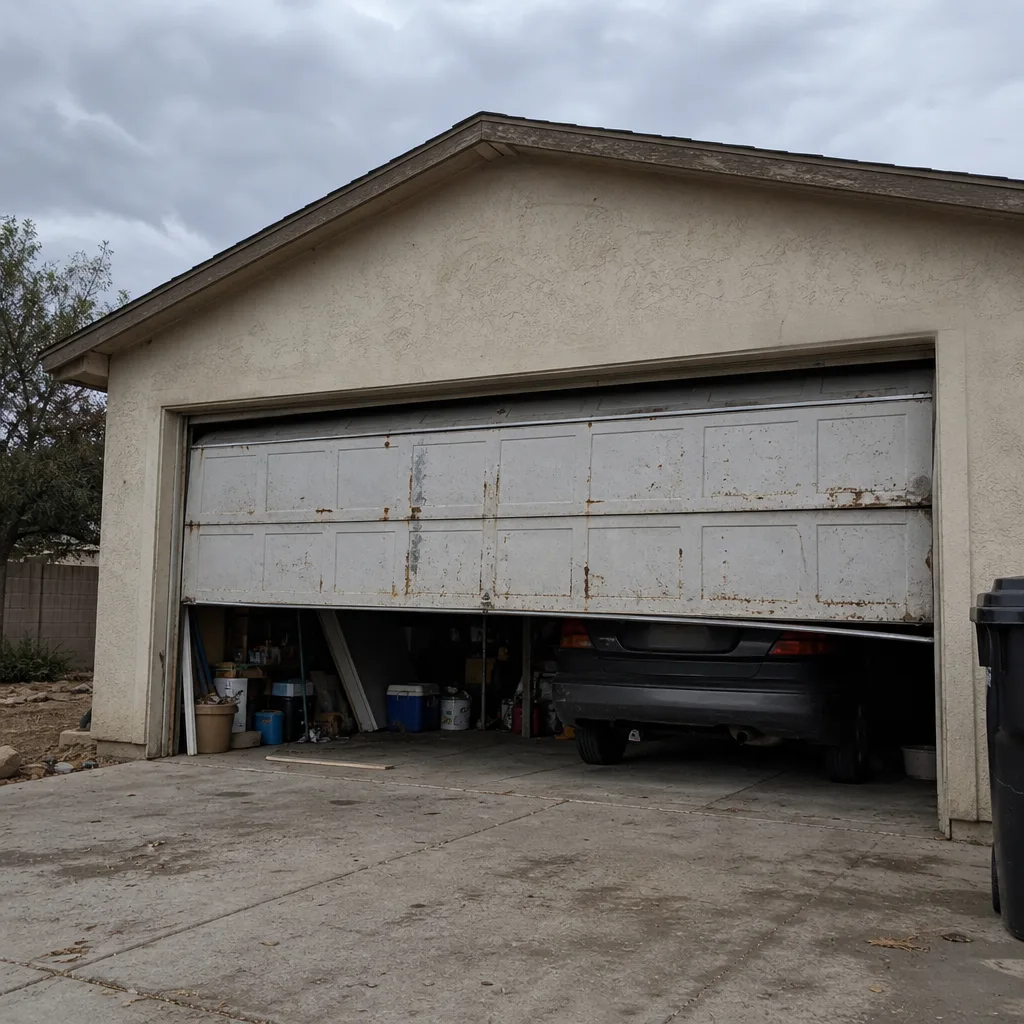 Before
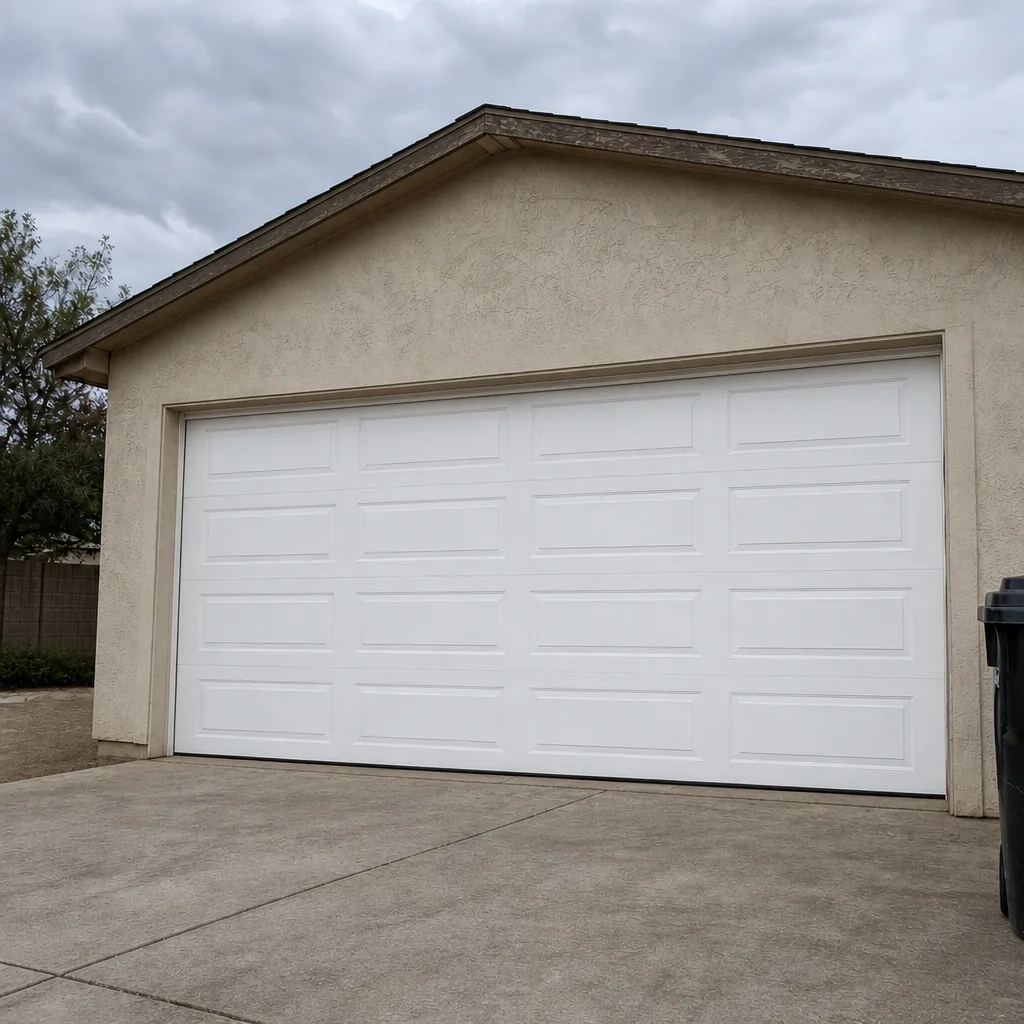 After
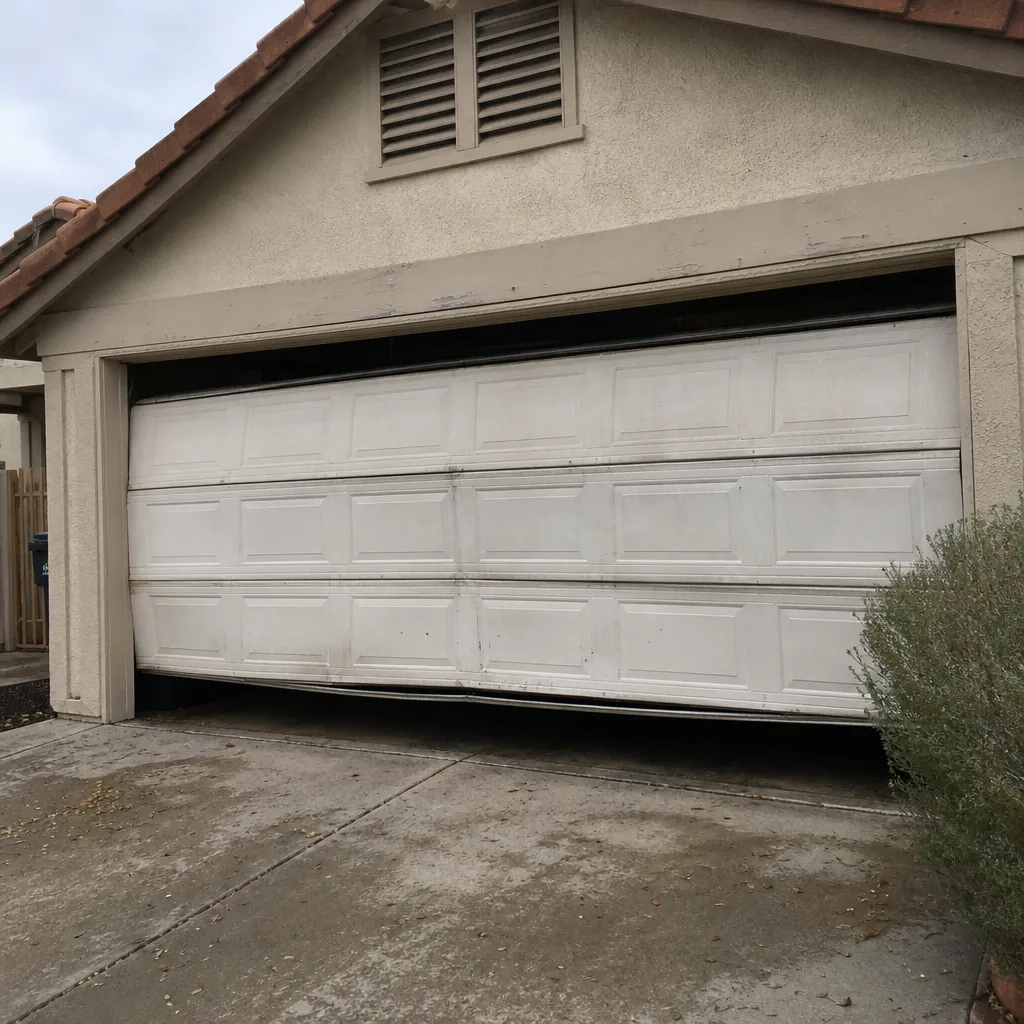 Before
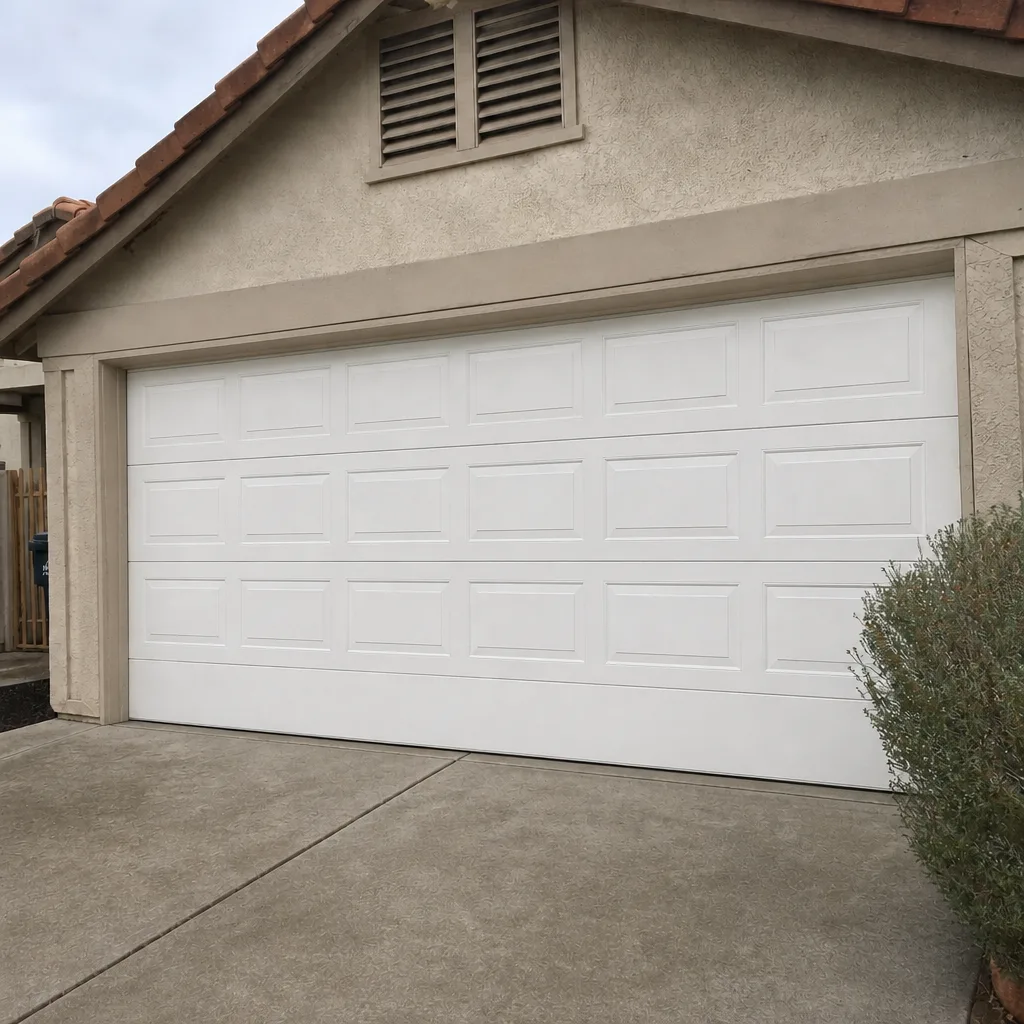 After
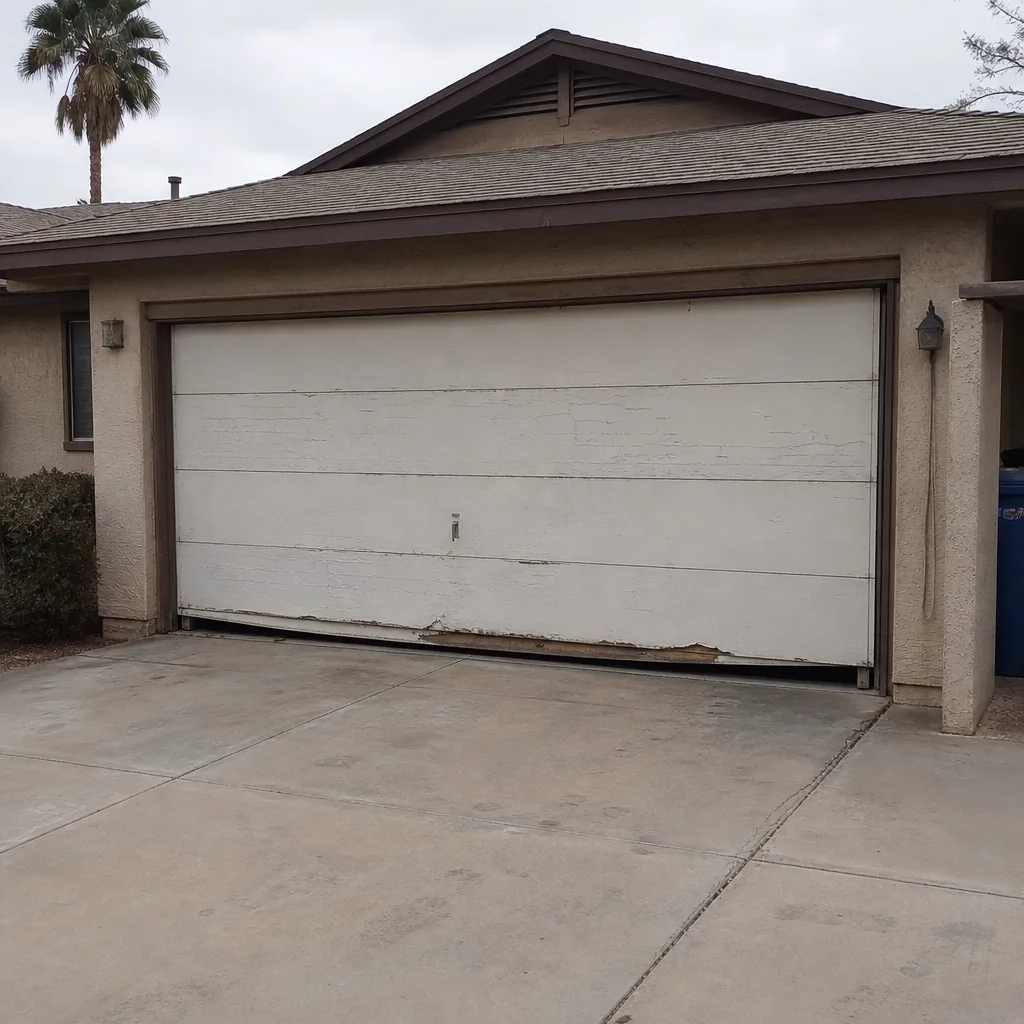 Before
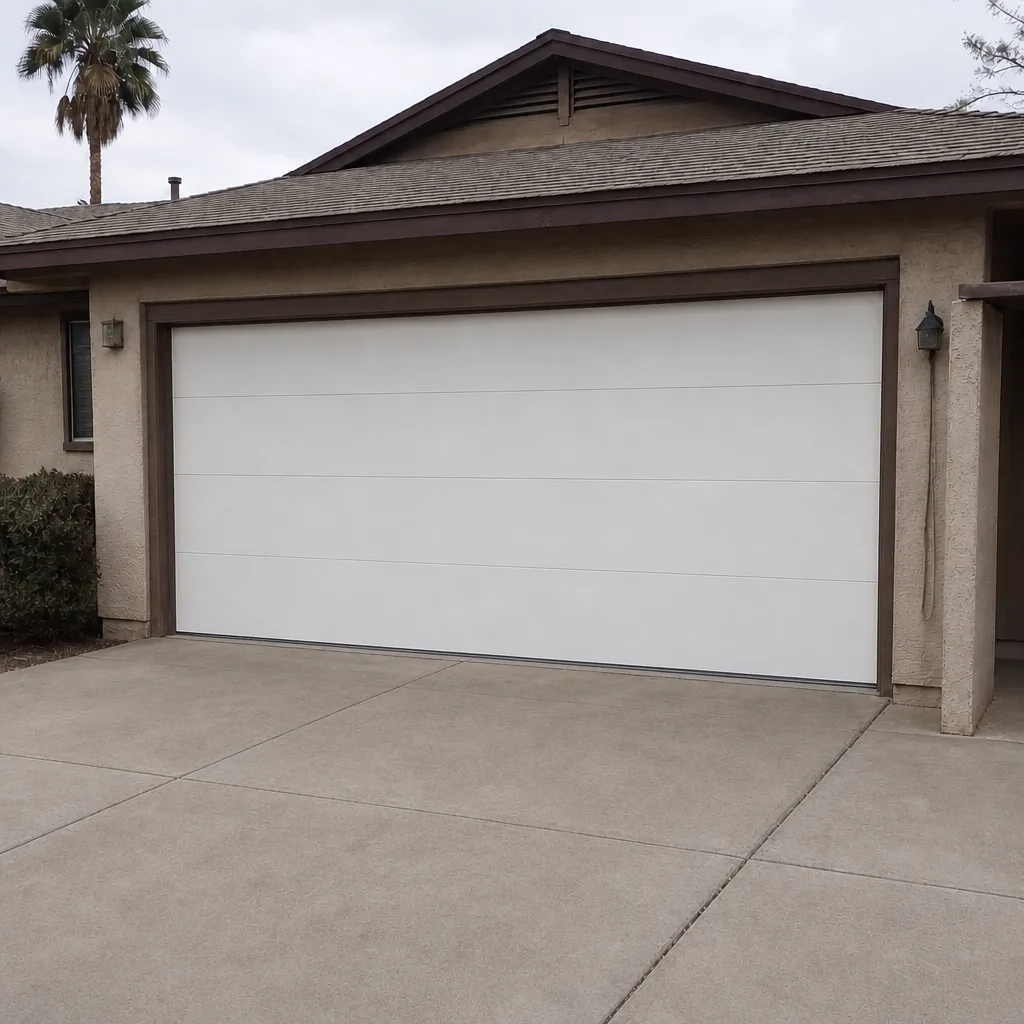 After
When to Call a Professional
Most of the seasonal care in this guide is within reach of any homeowner with an hour and a rag. The line is where observation stops and adjustment begins, and a few situations cross it clearly.
Call us if the door won’t balance (drops when you let go at the halfway point), if a spring has broken (there’ll be an obvious snap and the door will feel enormously heavy), if the cables appear loose or frayed, if the door reverses mid-travel without an obstacle, or if you see noticeable rust on the hinges after a monsoon season. These are the situations where the diagnosis needs to happen in person, and where a small repair now avoids a much larger one later.
Firstline Garage Door Repair offers free estimates in Tucson. Call (855) 632-1096. We answer 24/7. Fast dispatch from 7am to 7pm, Sunday through Friday. Our technicians have up to 15 years of experience and we work on the brand you already have, from LiftMaster and Chamberlain openers to Clopay and Amarr doors. The estimate is free and the price is set per job by the written estimate, agreed before any work starts.
Frequently Asked Questions
October is the best single month for major service in Tucson. Temperatures have fallen out of the triple digits, the effects of monsoon season are visible, and adjustments made now hold through the cool months. The second-best window is late May, right before monsoon humidity arrives. If you only do one service call a year, make it October.
Not in the way that word usually means. Tucson winters don’t produce the cold-weather problems that affect garage doors in colder climates. The two things worth attention in winter are lubricant thickening (use a lighter product in the cool months) and bottom seal stiffness (replace a cracked or rigid seal). That’s the full winter checklist.
Twice a year is the right rhythm here, and the two windows are May (before monsoon) and October (after monsoon). The May session prepares the hardware for moisture and dust. The October session cleans up after the summer and prepares for the cool months. Between those, a spot-check after any major dust storm is sensible.
Usually not, and it’s typically easy to fix. Cold mornings thicken the lubricant on the hinges and rollers, which adds resistance, and a stiff bottom seal adds more. If the door runs smoothly by mid-morning, the hardware is fine and the lubricant is the culprit. If the door struggles all day, it’s worth a service call. Call (855) 632-1096 for a free estimate if you want it looked at.
Most heat-stressed openers can be repaired, not replaced. The common culprits are capacitors, worn gears, and occasionally a logic board. In our experience, the diagnosis almost always turns up one part, not a whole unit. If your opener is showing the warning signs (grinding, reversing for no reason, stopping partway up), get it looked at in spring before summer heat pushes it over the edge.
Most cities require a permit for a full door replacement, but not for routine repair or spring adjustment. The exact rules are set by the city’s building department, so the answer for your specific address is best confirmed with them. For a replacement, the permit is typically handled as part of the installation. For a repair, if you’re not sure, a quick call to the city settles it.
The Bottom Line
Tucson’s garage door year isn’t four seasons. It’s a heat ramp (March to May), a pre-monsoon window (May to June), the monsoon itself (July to September), a critical post-monsoon reset in October, and a mild winter (November to February) where the issue is lubricant and seals, not cold. The two most important maintenance actions are the pre-monsoon lubrication in May and the full post-monsoon reset in October. The two most common mistakes are waiting for a small binding problem to become a big one, and skipping the bottom seal because it looks fine. And the one part of the system that isn’t DIY is anything involving the springs or cables. If you want help with any of the adjustments above, call (855) 632-1096 for a free estimate. We work on the brand you already have.
Written by the team at Firstline Garage Door Repair.